
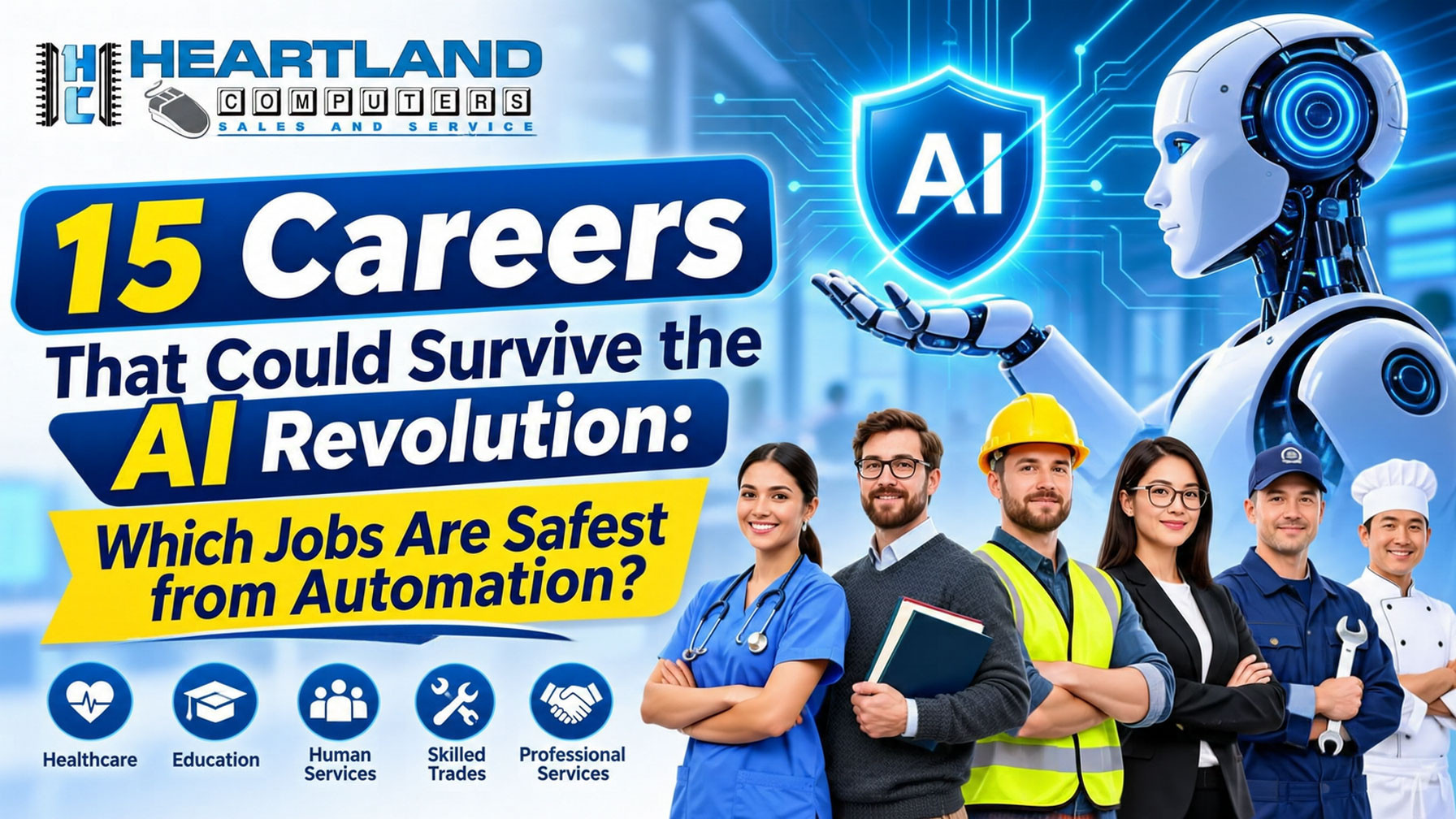

Artificial intelligence is changing how many jobs get done. It can draft reports, summarize information, answer routine questions, and help people analyze data. But that does not mean every job is about to disappear.
Many occupations still depend on showing up in person, using skilled hands, making decisions in changing situations, or caring for another person. These jobs may use AI tools, but much of their work is difficult to automate from beginning to end.
There is no such thing as a guaranteed “AI-proof” career. A more useful question is: Which jobs are likely to change less because they depend on human skills and hands-on work?
Three traits that can make a career more resistant to automation
Physical presence. A technician may need to inspect a machine in a noisy plant. A nurse may need to help a patient move safely. Work that depends on being at a particular place is harder to automate remotely.
Manual dexterity. Many jobs call for careful hand movements, adapting to unfamiliar equipment, and working in tight or unpredictable spaces.
Real-time human judgment. A person may need to weigh safety, risk, ethics, and someone’s changing needs. AI can offer information, but a qualified worker remains responsible for what happens next.
These are useful clues, not guarantees. AI can still change how each job is organized. The U.S. Bureau of Labor Statistics’ employment projections are one resource for considering job outlook alongside the work itself.
Skilled trades and hands-on technical work
1. Electricians
Electrical work calls for careful installation, testing, and troubleshooting in real buildings and job sites. Plans and conditions can differ from one project to the next, and safety rules matter at every step. AI may help with estimates and reference information, but a trained electrician still needs to inspect, test, and complete the work.
2. Plumbers and pipefitters
A plumbing or piping problem can involve unusual layouts, limited access, older equipment, and signs of damage that are not obvious from a screen. Workers adapt on-site, fit and repair components, then check that the system works properly. Cameras and software can help with inspection, but the repair is often hands-on.
3. HVAC technicians
Heating and cooling systems combine electrical, mechanical, and airflow problems. A technician may use digital diagnostics, then inspect equipment, replace parts, and verify safe operation. Connected systems can make some troubleshooting easier, but they do not remove the need for field work and practical judgment.
4. Industrial machinery mechanics
Factories and other workplaces depend on equipment that needs installation, maintenance, and repair. Sensors may flag unusual temperatures or vibration, helping mechanics spot issues earlier. Workers still need to inspect the machine, identify the cause, handle repairs, and return equipment to service safely.
5. Auto and diesel mechanics
Vehicles combine electronics, software, and mechanical components. Diagnostic tools can help narrow down a problem, but technicians also need to inspect parts, test systems, and make repairs. As vehicles change, staying current with new systems and equipment becomes an important part of the job.
Healthcare and direct patient care

6. Nursing assistants and phlebotomists
These roles involve direct contact with patients. Nursing assistants help with everyday care and mobility. Phlebotomists collect blood samples and help patients feel informed and at ease. Digital tools may assist with records and scheduling, but careful technique, communication, and attention to a person’s condition remain central.
7. Surgical assistants and allied health roles
Surgical assistants support care in settings where teams follow detailed procedures and respond to changing needs. Other allied health workers may prepare equipment, help with testing, or assist patients with a specific part of their care. Accuracy, coordination, and accountability are difficult to reduce to automated tasks alone.
8. Physical therapists and occupational therapists
Therapists work with people to improve movement and everyday function. They observe how a person moves, adjust exercises, provide hands-on support when appropriate, and encourage progress. AI may help with monitoring or planning, but treatment still depends on a professional understanding of the individual patient.
Emergency, safety, and high-responsibility work

9. Firefighters
Firefighters work in changing, high-risk situations where they must protect people and coordinate with a team. Equipment and mapping technology can support their work, but assessing a scene and responding safely still requires training, physical capability, and real-time judgment.
10. EMTs and paramedics
An emergency call can change quickly. EMTs and paramedics assess patients, provide care, and make decisions under pressure. Technology may assist with dispatch or documentation, but it cannot replace the human interaction and hands-on response required at the scene.
11. Hazardous materials removal workers
Hazmat workers follow strict procedures to handle or remove dangerous materials. They need to assess conditions, use protective equipment, and respond carefully when a site presents unexpected risks. Sensors and other tools can inform their decisions, but safety still depends on skilled workers applying those tools responsibly.
12. Commercial pilots
Pilots work in a highly regulated field where training, certification, and safety responsibilities are essential. Automation is already part of aviation, so this is not an untouched profession. However, crews remain responsible for monitoring systems, communicating, and responding to conditions that require human judgment.
Building, education, and personal services
13. Construction supervisors and skilled builders
Construction sites bring together equipment, materials, schedules, safety requirements, and teams of people. Supervisors coordinate the work and respond when conditions change. Builders and other skilled workers use tools and judgment to complete tasks that vary by site. Digital planning can help, but the job still happens in the physical world.
14. Childcare and early education workers
Young children need supervision, communication, and care that responds to what is happening in the moment. Early education workers help children learn, manage routines, and interact with others. Apps can support lesson planning or administration, but they cannot replace a trusted adult’s presence and responsibility.
15. Hair stylists, barbers, and cosmetologists
Personal services combine hand skills, conversation, and attention to a client’s preferences. Each person’s hair, style, and requests are different. Technology may help with booking or inspiration, but the service itself depends on a trained professional listening and working carefully.
A bonus path: computer repair and IT field technicians

Technology work is not automatically safe from automation. AI can handle some routine software tasks, answer common questions, and help organize support requests. That is already changing parts of IT.
But many technical problems still need someone to examine the device, test components, connect equipment, or work on-site. Security-sensitive situations also call for clear communication and careful handling of a customer’s systems and information. More specialized field work, such as supporting networks, data centers, industrial equipment, or cybersecurity, can build on those practical skills.
For a local example, computer repair in Omaha and laptop repair often involve understanding the person’s needs as well as diagnosing the equipment. Technology can assist with the process, but customers still value dependable help from someone who can explain the problem and the next step.
What this means for students and career changers
Rather than choosing a career based on an “AI-proof” label, look at the tasks it involves and the skills you can keep building. Ask:
- Does the work require hands-on problem-solving or in-person care?
- Will I need to make decisions when conditions are changing?
- Are there certifications, apprenticeships, or training programs I can pursue?
- Can I learn to use AI tools as part of the job?
- Are there related specialties that match my interests and local opportunities?
The strongest approach is often to combine practical expertise with technology skills. A mechanic who understands diagnostic software, a healthcare worker who uses digital records well, or a technician who can troubleshoot both hardware and networks may be better prepared as tools change.
No single career path suits everyone. Pay, training costs, physical demands, work schedules, and local job openings all matter. Review current occupational information and talk with people in the field before making a decision.
Technology skills still matter
AI may change the tasks within a job, but being comfortable with computers and digital tools can help you adapt. If you or your family would like help building those skills, Heartland Computer offers one-on-one technology training, along with PC, Mac, and laptop support.
We’re a local team with more than 20 years of experience, over 50,000 devices repaired, a 98% client satisfaction rate, and an A+ Better Business Bureau rating. We serve Omaha and Council Bluffs with friendly, practical technology help.
Have a computer question or need a free consultation? Call us at 402-502-7040 in Omaha or 712-256-8686 in Council Bluffs, or visit heartlandcomputer.com.


















Join the conversation
Questions about this article? Ask below — our team reads every comment.