
Popular Languages for App Development in 2025
Native App Development Languages
Kotlin
Kotlin is a modern, statically typed language primarily used for Android app development. Since Google declared it the preferred language for Android in 2017, Kotlin has gained traction for its concise syntax, safety features, and interoperability with Java.
-
Why Use Kotlin?
- Null Safety: Reduces null pointer exceptions, a common issue in Java.
- Concise Code: Less boilerplate compared to Java, improving readability.
- Android Support: Official support from Google with robust tools in Android Studio.
- Use Case: Ideal for Android apps requiring high performance and modern features, such as banking or e-commerce apps.
-
Example: A simple Android button click handler in Kotlin:
button.setOnClickListener {
    Toast.makeText(this, "Button Clicked!", Toast.LENGTH_SHORT).show()
}
Java
Java, a veteran in the programming world, remains a cornerstone for Android development. Its platform independence and vast ecosystem make it reliable for large-scale apps.
-
Why Use Java?
- Mature Ecosystem: Extensive libraries and frameworks.
- Community Support: Decades of resources and documentation.
- Stability: Backward compatibility ensures older apps remain functional.
- Use Case: Suited for enterprise-level Android apps or projects requiring legacy code integration.
-
Example: A basic Java Android button click handler:
button.setOnClickListener(new View.OnClickListener() {
    @Override
    public void onClick(View v) {
        Toast.makeText(MainActivity.this, "Button Clicked!", Toast.LENGTH_SHORT).show();
    }
});
Swift
Swift is Apple’s go-to language for iOS, macOS, watchOS, and tvOS apps. Introduced in 2014, it’s known for its performance, safety, and developer-friendly syntax.
-
Why Use Swift?
- Performance: Optimized for Apple hardware, often outperforming Objective-C.
- Safety Features: Strong typing and error handling prevent common bugs.
- Xcode Integration: Seamless with Apple’s development tools.
- Use Case: Perfect for iOS apps like fitness trackers or media streaming services requiring native performance.
-
Example: A simple iOS button action in Swift:
@IBAction func buttonTapped(_ sender: UIButton) {
    let alert = UIAlertController(title: "Tapped", message: "Button was tapped!", preferredStyle: .alert)
    alert.addAction(UIAlertAction(title: "OK", style: .default))
    present(alert, animated: true)
}
Cross-Platform App Development Languages
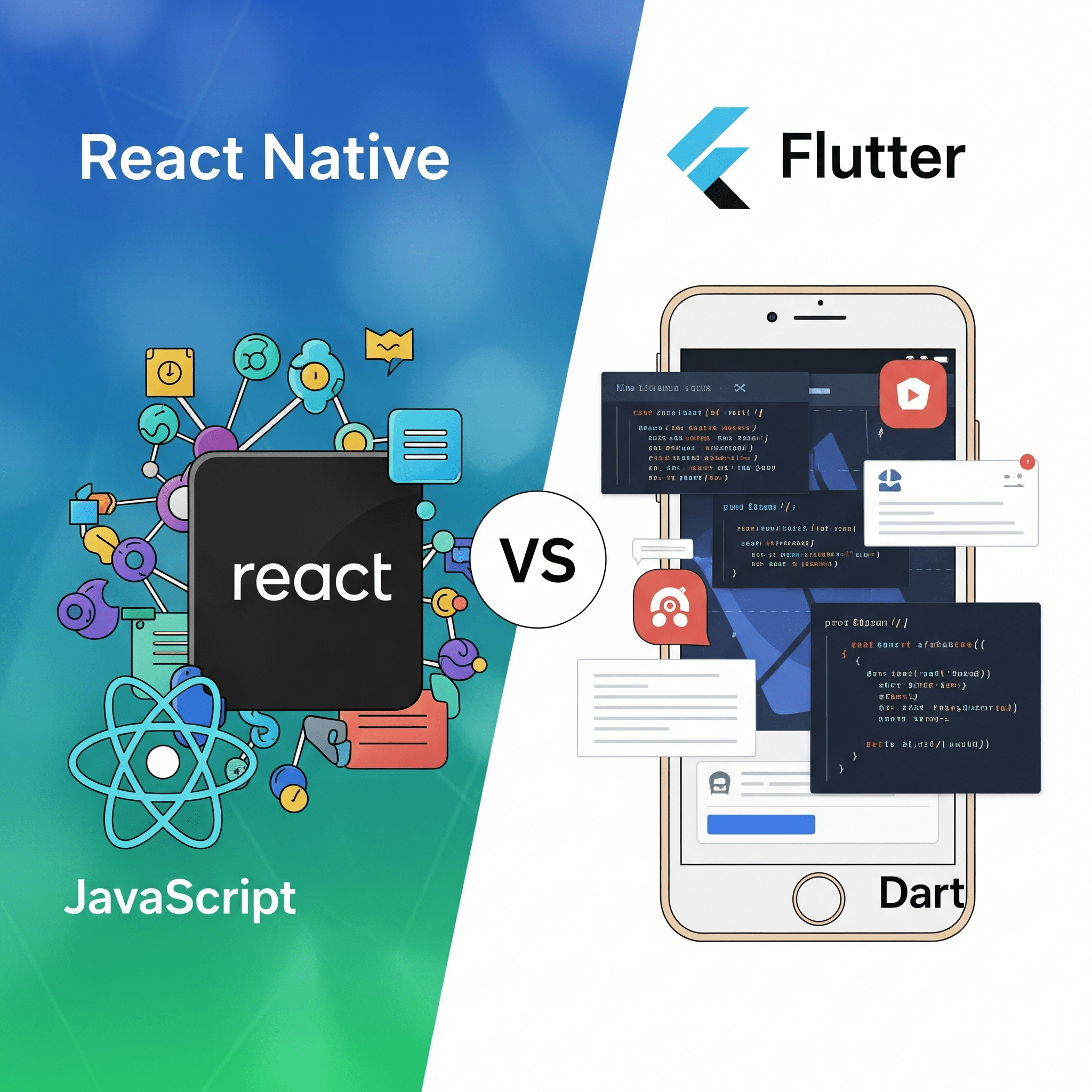
React Native
React Native, built by Facebook, allows developers to create iOS and Android apps using JavaScript and React. It enables code reuse across platforms while delivering near-native performance.
-
Why Use React Native?
- Code Reusability: Write once, deploy on both iOS and Android.
- Hot Reloading: Speeds up development with real-time updates.
- Community and Libraries: Access to a vast ecosystem of JavaScript libraries.
- Use Case: Great for startups or apps needing rapid development, like social media or e-commerce apps.
-
Example: A simple React Native button component:
import React from 'react'; import { Button, Alert } from 'react-native'; const App = () => { return (
Flutter
Flutter, developed by Google, uses the Dart language to build cross-platform apps with a single codebase. Known for its fast performance and customizable widgets, Flutter is gaining popularity.
-
Why Use Flutter?
- Single Codebase: Build for iOS, Android, web, and desktop from one code.
- Skia Engine: Delivers smooth, native-like UI with 60fps rendering.
- Widget Library: Extensive pre-built widgets for rapid UI development.
- Use Case: Ideal for visually rich apps like games or design-focused tools.
-
Example: A basic Flutter button:
import 'package:flutter/material.dart';

void main() {
  runApp(MyApp());
}

class MyApp extends StatelessWidget {
  @override
  Widget build(BuildContext context) {
    return MaterialApp(
      home: Scaffold(
        body: Center(
          child: ElevatedButton(
            onPressed: () {
              ScaffoldMessenger.of(context).showSnackBar(
                SnackBar(content: Text('Button Pressed!')),
              );
            },
            child: Text('Click Me'),
          ),
        ),
      ),
    );
  }
}
Choosing the Right Language
- Native Development (Kotlin, Java, Swift): Best for apps requiring high performance, deep platform integration, or access to the latest OS features. Choose Kotlin or Java for Android, Swift for iOS.
- Cross-Platform (React Native, Flutter): Ideal for projects with limited budgets or timelines, where code reuse and faster deployment are priorities.
Trends in 2025
- Kotlin Multiplatform: Gaining traction for sharing code between Android, iOS, and other platforms.
- Flutter’s Growth: Increasing adoption for web and desktop apps alongside mobile.
- React Native’s Stability: Continued improvements in performance and tooling.
Each language has its strengths, and the choice depends on your project’s goals, team expertise, and target platforms. Whether you prioritize native performance or cross-platform efficiency, these languages empower developers to build robust apps in 2025.



















Join the conversation
Questions about this article? Ask below — our team reads every comment.